The university organizes, through the Modeling and Simulation Center for Risk Analysis, a scientific day titled "From Air to Harvest: Agriculture Without Borders."
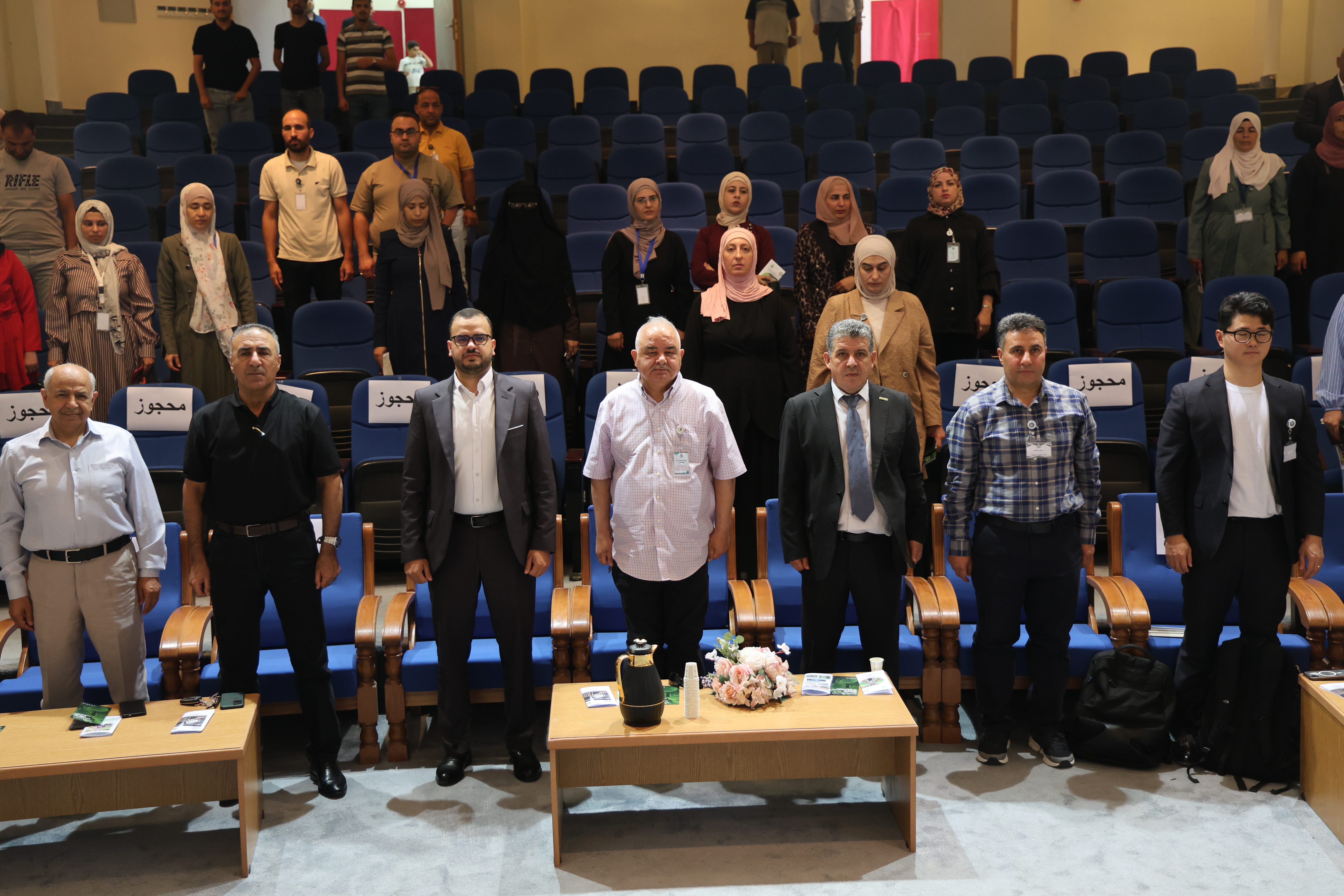
On behalf of the President of the University, Professor Dr. Osama Nusier, the Vice President for Community and International Affairs, Professor Dr. Hani Abu Arsheeda, attended by the Director of the Modeling and Simulation Center for Risk Analysis, Professor Dr. Muayyad Al-Shawafqa, and a number of representatives of partners and some relevant government bodies and institutions, sponsored the scientific day entitled (From Air to Harvest: Agriculture Without Borders), which comes within the KOIKA Seed Project 2, organized by the center at the university in cooperation with the Korean International Cooperation Agency (KOICA) and the Korean company Medbar, with the aim of enhancing agricultural productivity and economic self-reliance for the most needy groups through water-saving smart agriculture in Mafraq Governorate. The event was held in Al-Hassan Auditorium at the university.
During the opening, Dr. Al-Shawafqa explained that the university is a platform for experimentation, innovation, and knowledge transfer, and views this project as part of the university's mission to serve and develop the local community, and to link scientific research and technology with the real development needs in Mafraq Governorate and the Kingdom in general, pointing to the university's partnerships and its orientations to build smart and sustainable agricultural models that can be developed and expanded in the future to serve local communities and target groups.
Expert Joseph Lee, representing one of the companies in South Korea, presented the Korean experience in smart agriculture and the latest applications used there. Lee explained, by raising questions, how technology can contribute to achieving human dreams, detailing his experience in Jordan during his presence in recent years and his work specializing in groundwater and agriculture, training Syrian refugees, and the experience he gained from how to benefit from modern technology and developed programs for agriculture, noting that there are obstacles, but with faith in the idea in this field, modern technology and project sustainability reduce these obstacles.
At the conclusion of the scientific day, presented by Engineer Raghad Al-Sardiah from the Faculty of Engineering, an extensive dialogue and discussion took place between the attendees and the lecturers, through which they answered questions and inquiries in this field.
