Signing a cooperation agreement between Al al-Bayt University and the National Aid Fund
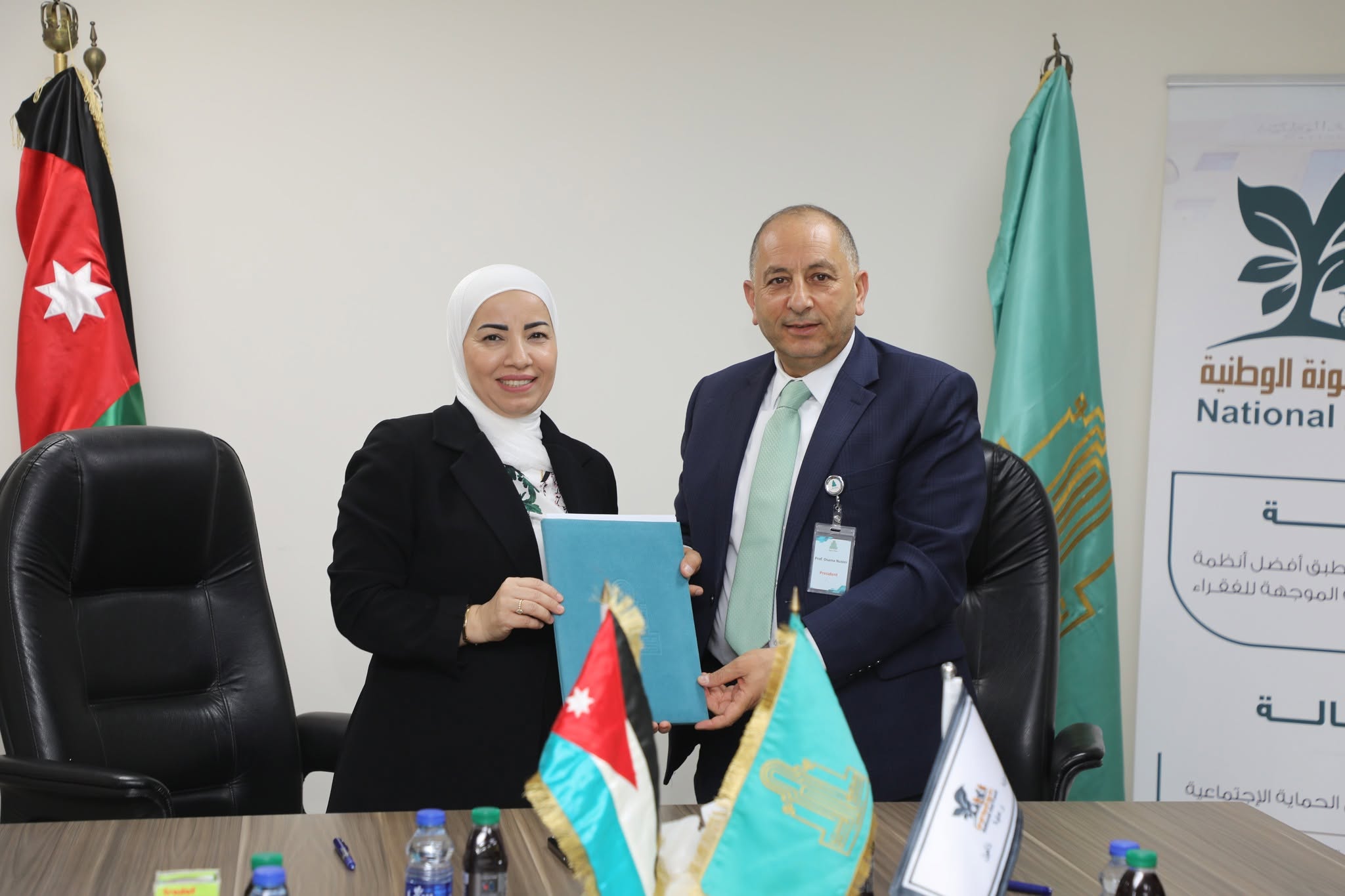
As part of the university's plan for networking and cooperation with Jordanian national institutions and within the framework of the National Aid Fund's national strategy, and with the aim of empowering the beneficiaries' families to provide them with the necessary skills to enter the labor market, the President of the University, Professor Dr. Osama Nusier, and the representative and Director-General of the National Aid Fund, Ms. Khitam Al-Shneikat, signed a joint cooperation agreement in the presence of the Vice President of the University, Professor Dr. Muhannad Nazzal, Assistant Director-General of the Fund Ayman Rababa, Director of the Consultations, Training and Capacity Building Center, Dr. Haifa Al-Dalabeeh, and Director of the National Aid Fund in Mafraq, Ms. Haniyah Abu Al-Hayyal.
Dr. Nusier praised, during the meeting and the signing of the agreement, the national efforts made by the Fund compared to developed countries, commending this partnership and stressing that the university seeks to contribute to economic and social development through diverse training and qualification programs that meet the needs of the labor market. It attaches great importance to its societal role in addition to its academic role through this agreement in areas of cooperation in training and innovation.
Ms. Al-Shneikat also stressed during the meeting the importance of strategic partnerships with governmental universities, including Al al-Bayt University, pointing to its pivotal role in promoting sustainable development and empowering targeted groups through the new specializations it offers, aligning training outputs with labor market needs and expanding the base of opportunities available to beneficiaries, which positively reflects on reducing unemployment rates and stimulating the national economy.
The agreement aims to provide systematic and applied training and qualification opportunities for the beneficiaries' families that meet the needs of the Jordanian labor market and keep pace with technological developments, provide trainees with practical experiences and skills through programs that combine theoretical and practical aspects, build trainees' capabilities and develop their personal and professional skills, contribute to reducing youth unemployment rates and enhancing employment and entrepreneurship opportunities, and strengthen partnership with government institutions.
