The Collapse of the Ottoman Empire: A scientific seminar held by the History Department at the University.
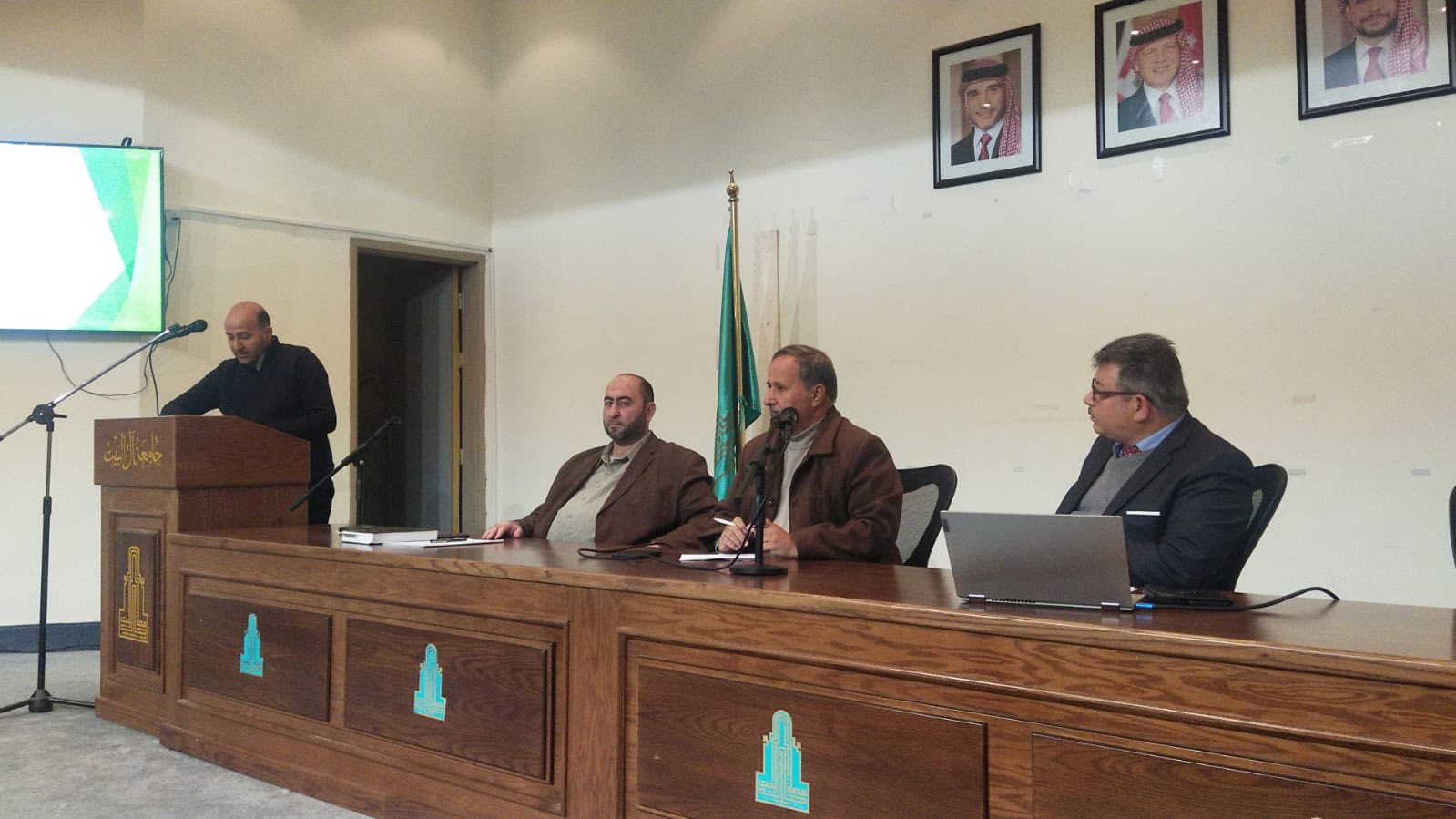
As part of the series of seminars and lectures held by the Faculty of Arts and Humanities at the university this semester, the Department of History, under the patronage of the Vice Dean of the Faculty of Arts, Professor Dr. Ayed Taran, organized a scientific seminar on the collapse of the Ottoman Empire, its causes and factors, with a new reading on the collapse of the Ottoman Empire in light of its relationship with Germany in the late nineteenth and early twentieth centuries, in the Al-Hassan Bin Talal Amphitheater at the university.
The seminar, in which specialists from the Department of History, Dr. Alaa Saadeh and Dr. Abdul Majeed Ali, spoke, was presented and moderated by the Head of the Department of History, Dr. Khader Al-Sarhan. The first speaker was Dr. Saadeh, who began his speech on the Ottoman Empire and the relationship of Sultan Abdul Hamid with the German Empire at the time and the European countries during the First World War and the economic interests between them. He also referred to the journey of the German and Ottoman Empires throughout history and the actions of the Committee of Union and Progress against the free Arabs and their coup against them after the Great Arab Revolution, as well as the policy of repression that prevailed at the time and the persecution of Arab dignitaries and scholars and the practice of Turkification against the Arabs. Saadeh also mentioned during his speech the state of advancement and decline, stability and regression, as well as the position of Sultan Abdul Hamid and the position of Sharif Hussein bin Ali on colonialism and political threats, and they both ended up with the same fate, to exile.
In his second paper during the seminar, Dr. Abdul Majeed Ali explained the reality of the Ottoman Empire and its relationship, as he relied on documents from the German Foreign Ministry after the First World War. He also presented an analysis of the political and economic aspects, debt management and its exploitation against the Ottoman Turks at the time, and the control of the railway. He also pointed to the deterioration of the financial situation and the Germans contributed to the erosion of the German policy of the Ottoman economy during the Berlin Conference, which led to a financial collapse of the Ottoman Empire and the erosion of its policies and economy in general, which led it to a dilapidated state and bankruptcy. He also referred to a decree reducing German debts to Turkey and the control and economic dependency of the creditor European countries, banking colonialism and full control over Turkish Ottoman financial resources. From a strategic point of view, the researcher Ali referred to the description of one of the researchers of the German economy that this bank embodied the imperialist colonialism of the Ottoman resources. Abdul Majeed also spoke about the infrastructure of transportation in the Ottoman Empire in terms of roads and railways at the end of the nineteenth century, military and political armament, building an alliance with the Germans, and linking common interests.
At the end of the seminar, which was attended by faculty members and students of the Faculty of Arts and Humanities, researcher Mohammed Al-Khaldi, a master's graduate from the Department of History, made an intervention on the Ottoman Empire, followed by an extensive dialogue and discussion between the lecturers at the seminar and the audience.
